
How to Choose the Best Cosmetic Tube Filling Machine for Your Business (2026 Guide)


Selecting the right cosmetic tube filling and sealing machine is a critical investment that directly impacts your production efficiency, product integrity, and brand aesthetics. Whether you are filling high-viscosity creams into PE tubes or luxury serums into aluminum-plastic tubes, this guide covers the technical essentials you need to know.Choosing the best cosmetic tube filling machine means finding what works for you. You need a machine that fits your product’s thickness. It should handle how much you make each day. It must help you reach your packaging goals. Many businesses have problems like high prices, hard upkeep, and needing machines that can grow with them. Here is a quick look at what most companies face:
| Challenge | Description |
|---|---|
| High Initial Costs | Advanced machines cost a lot, especially for small businesses. |
| Complex Maintenance Requirements | Keeping machines working takes work and can slow you down. |
| Customization Needs | Machines must work with many products, so one size does not fit all. |
| Limited Scalability | Growing companies need better machines, but these can be pricey and tough to upgrade. |
If you want to avoid these problems, compare machine types, features, and suppliers like Xinfly Packaging to get the best results.
Key Takeaways
- Know how thick your product is. Pick a machine that works with your product’s thickness. This helps the filling go well.
- Think about how much you make each day. Get a machine that fits your daily needs. You can pick manual, semi-automatic, or fully automatic.
- Look at what packaging you need. Some tubes need special machines. Make sure you know which packaging is best for your product.
- Focus on being exact and quick. Find machines that fill with good accuracy. Fast machines help you work better.
- Pick a supplier you can trust. A good supplier helps with support and training. They also help keep your machine working well.
Match the Machine to Your Tube Material
The sealing technology differs significantly depending on the material of your cosmetic tubes.
- PE & Laminated Tubes: These require Hot Air Sealing or Ultrasonic Sealing technology. The machine heats the inner wall of the tube tail to create a permanent, leak-proof bond.
- Aluminum Tubes: These require Mechanical Folding. The machine folds the metal end multiple times (saddle fold or triple fold) to ensure a tight seal without heat.
Pro Tip: If your brand uses eco-friendly PCR (Post-Consumer Recycled) tubes, ensure your machine has precise temperature control to avoid compromising the recycled material’s structure.
Filling Accuracy and Viscosity Handling
Cosmetic formulas range from watery toners to thick, clay-based masks. Your filling machine must handle these variations without “tailing” or leaking.
- Piston Fillers: The industry standard for most cosmetics. They offer high precision (typically ±0.5% to 1%) for creams and gels.
- Servo-Driven Pumps: Best for high-end production lines. They allow for digital adjustment of filling speeds, reducing air bubbles and ensuring consistent volume for every unit.
Automation Level: Scalability for Your Business
Choose a machine that aligns with your current output and future growth:
Integrating with Your Packaging Supplier
A common pitfall is buying a machine that isn’t perfectly calibrated for your tubes. We recommend:
- Sending Samples: Always send 50-100 empty tubes from your supplier to the machine manufacturer for testing.
- Sealing Patterns: Decide if you want a straight seal, curved seal, or a “hanging hole” punch for retail displays.
Assessing Cosmetic Industry Needs
Product Viscosity
When you choose a tube filling machine, you need to think about how thick your cosmetic products are. Some products, like lotions, flow easily. Others, like creams or gels, move slowly and can be sticky. The thickness, or viscosity, changes how the machine works. Here are a few things to keep in mind:
- Low-viscosity products fill quickly with simple gravity machines.
- Thick creams need piston or pump fillers to push the product through.
- Thin liquids might drip, so you need special nozzles to stop leaks.
- Thick products can clog narrow nozzles, so you need wider openings.
- Machines for thick products often cost more because they need stronger pumps.
If you make both thin and thick cosmetic products, you may need a machine that can handle both types. This helps you meet different cosmetic industry needs without buying extra equipment.
Packaging Requirements
The packaging you choose matters just as much as the product itself. In the cosmetic world, you see many types of tubes. Each one has a special use:
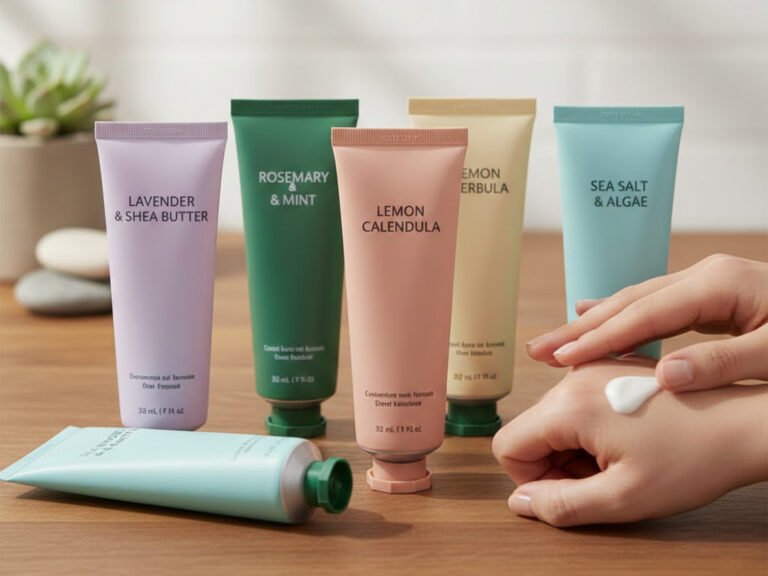
- Squeeze tubes work well for lotions and gels. They are easy to use and made from plastic.
- Airless tubes keep air out. They protect sensitive creams and serums.
- Laminate tubes mix plastic and aluminum. They keep out moisture and air, perfect for high-end skincare.
- Metal tubes, often aluminum, give strong protection. You see these with ointments.
Knowing the right tube for your product helps you pick the best machine. Xinfly Packaging, a cosmetic tubes supplier, offers many options to fit your needs.
Production Scale
How much you plan to make each day changes what machine you need. If you run a small business, you might start with a manual or semi-automatic machine. These work well for small batches and let you control the process. If you want to grow or already have high demand, you need a fully automatic machine. These machines fill and seal tubes fast, helping you keep up with orders. Think about your future plans. If you expect to grow, choose a machine that can scale with you. This way, you avoid buying new equipment every time your business gets bigger.
When you match your machine to your product’s viscosity, packaging, and production scale, you set yourself up for success. You also make sure you meet the common applications of cosmetic filling machines in the market.
Types of Cosmetic Tube Filling Machine
When you look for a cosmetic tube filling machine, you will find three main types. Each type works for different business sizes and goals. Let’s look at manual, semi-automatic, and fully automatic machines.
Manual Machines
Manual tube filling machines are good for small batches. You use your hands to control the process. These machines are great if you have a small shop or want to test new products. You fill each tube by yourself, so you have lots of control. It takes more time and effort, but you spend less money at first.
Here is a simple table to show how manual machines compare to automatic ones:
| Type of Machine | Output Capacity (tubes per minute) |
|---|---|
| Manual | 10 to 15 |
| Automatic | 50 to 70 |
Manual machines need skilled workers. You must pay close attention to every step. Here is a table about labor needs:
| Machine Type | Human Intervention Level | Skill Level Required |
|---|---|---|
| Semi-Automatic | High | Moderate |
| Automatic | Low | Minimal |
Manual tube filling machines are flexible. You can switch between different products easily. If you want to save money and do not need high speed, this type is good for you.
Tip: Manual machines let you try new formulas or packaging without spending a lot.
Semi-Automatic Machines
Semi-automatic tube filling machines help you make more products. You still need workers, but the machine does most of the work. You load the tubes, and the machine fills and seals them. This type is good if you want to grow your business but do not need full automation yet.
Here are some reasons to pick semi-automatic tube filling machines:
- Higher output than manual machines
- More accurate filling
- Less need for workers
- Easy to take care of
- You can change the amount filled for each batch
Semi-automatic machines use automated systems for filling and sealing. You get better speed and fewer mistakes. Here is a table to compare them with automatic machines:
| Feature | Automatic Machines | Semi-Automatic Machines |
|---|---|---|
| Speed | Fills and seals hundreds of tubes/hour | Slower, around 200 tubes/hour |
| Labor Requirements | Needs one operator | Needs two or three operators |
| Quality and Consistency | Very consistent, few errors | Depends on worker skill, some changes |
| Flexibility | Not very flexible, best for big jobs | More flexible, good for custom tasks |
Semi-automatic tube filling machines give you a good balance. You get more speed and less manual work, but you still have some control. If you want to fill different products, you can change settings for each batch.
Fully Automatic Machines
Fully automatic tube filling machines are best for big companies. These machines use advanced equipment to fill and seal tubes quickly. You only need one person to watch the process. The machine does everything else.
Look at the speed of these machines:
| Machine Type | Production Capacity (pcs/minute) |
|---|---|
| High Speed Automatic Tube Filling Machine | 30—50 (adjustable) |
| High Speed Fully Automatic Cosmetic Hairspray Tube Filling and Sealing Machine | 30-50 |
Fully automatic tube filling machines make lots of products fast. Some models can fill up to 40,000 tubes every hour. These machines use rotary tables, robots, and special controls. You may see features like servo motors, ultrasonic or heat sealing, and weight checking.
Here are some features you might find:
- Rotary table for moving tubes
- Robots for loading and unloading
- System for feeding and turning tubes
- Programmed control with PLC or microprocessor
- Servo motors for accurate filling
- Sealing modules like ultrasonic or heat sealing
- Extra features like weight checking and leak detection
Fully automatic tube filling machines are best if you want to make thousands of products every day. You get fast speed, great consistency, and fewer mistakes. If you want to grow bigger, this type helps you reach your goals.
Note: Xinfly Packaging has many filling machines for cosmetics. You can choose manual, semi-automatic, or fully automatic models for your needs.
When you pick a filling machine for cosmetics, think about your business size, product type, and future plans. Manual machines are good for small batches. Semi-automatic machines help you grow. Fully automatic machines are best for making lots of products with less work.
Tube Filling Machine Features
Filling Accuracy
You want your products to look good every time. Filling accuracy is very important in a tube filling machine. Most standard machines fill with about ±2% accuracy. Some better machines, like the Grand machine, can fill with ±1% accuracy. The Single Head Cabinet Tube Filling Machine is even more exact, with 0.1% to 0.2% accuracy. These machines help you avoid putting too much or too little in each tube. This keeps your customers happy and helps your brand stay strong.
- Standard tube filling machines: ±2% accuracy
- Advanced systems: ±1% accuracy
- Single Head Cabinet: 0.1%–0.2% accuracy
Here is how accuracy helps your business:
| Evidence Source | Key Points |
|---|---|
| Laub Hunt | Accurate filling keeps product quality and customer satisfaction high. |
| Tech-Long | Precision in filling machines boosts your brand reputation. |
| Filling Machine PP | Accurate filling prevents complaints and regulatory problems. |
If you want to keep your quality high, pick a cosmetic filling machine that is very precise.
Speed and Automation
Do you need to make lots of products fast? Tube filling machines have different speeds. Some, like the GD-150A, can fill up to 150 tubes each minute. Others, like the VK-TFS-009UDC, fill slower, about 10 to 13 tubes per minute. The MIC-R60 is in the middle, filling 30 to 65 tubes per minute.
| Machine Model | Maximum Speed (tubes/min) | Minimum Speed (tubes/min) |
|---|---|---|
| GD-150A | 150 | 120 |
| VK-TFS-009UDC | 13 | 10 |
| MIC-R60 | 65 | 30 |
Automated machines make your work easier. They help you fill tubes more accurately and faster. You waste less product and keep your quality high. You can also change between different types of cosmetic liquid filling machines with just a few changes.
| Benefit | Description |
|---|---|
| Increased Accuracy | Automated systems remove human error, so every tube looks the same. |
| Improved Efficiency | Automated machines help you meet higher demand with faster production speed. |
| Reduced Waste | Automated filling techniques save you money by cutting down on spills and overfilling. |
| Enhanced Product Quality | Consistent filling keeps your cosmetic products effective and reliable. |
| Greater Flexibility | Automated systems handle many liquid types, so you can adapt quickly. |
If you want to do better, choose tube filling machines with advanced automation.
Hygiene and Compliance
Safety and cleanliness are very important in cosmetics. You need tube filling machines that follow strict rules. Most machines meet ISO 9001 for quality, CE Marking for safety, and GMP for clean production. These machines are easy to clean and help you track every batch.
| Standard | Description |
|---|---|
| ISO 9001 | Quality control at every step |
| CE Marking | Electrical safety and mechanical reliability |
| GMP | Sanitary production and easy cleaning |
Modern machines use Stainless Steel 316 for a clean design. They work in clean rooms to lower the risk of germs. Many models follow cGMP rules, so your products are safe.
| Feature | Description |
|---|---|
| Hygienic Design | Stainless Steel 316, easy to clean and sterilize |
| Low Contamination Risk | Clean room operation lowers contamination |
| cGMP Compliance | High product quality and safety |
Xinfly Packaging, a trusted cosmetic tubes supplier, has tube filling machines that meet these standards. You get machines that work well, are safe, and follow the rules for your business.
Things to Think About Before Picking a Cosmetic Filler Machine
When you want to buy a cosmetic tube filling machine, you should think about more than just how much it costs. You need a machine that works for your business now and can help you grow later. Let’s look at the main things you should think about before you choose a cosmetic filler machine.
Budget and Cost Analysis
Money is important when you buy a filling machine for cosmetics. You want to get the most for your money. New tube filling machines usually cost between $5,000 and $50,000. If you want a fancy model with special automated systems, it will cost more. Used machines can cost from $2,000 to $25,000, depending on how good they are and what features they have.
- New machines: $5,000–$50,000
- Used machines: $2,000–$25,000
- High-end models: Cost more, but have better automated systems and work better
You should also think about how fast you will earn back your money. A faster cosmetic filling machine helps you make more products and earn more. Here’s a simple table to show what affects how quickly you get your money back:
| Factor | Description |
|---|---|
| Initial Costs | The money you pay to buy the tube filling machine. |
| Machine Speed | Faster machines help you make more cosmetic products every day. |
| Maintenance Costs | Some machines need more care, which can make you spend more. |
| Technology Compatibility | Make sure the machine works with your current systems. |
| Regular Maintenance | Taking care of your machine helps it last longer. |
| Staff Training | Well-trained workers use the machine better and waste less. |
| Automation Integration | Automated systems can lower labor costs and help you make more. |
| Production Data Analysis | Use data to find problems and make your process better. |
| Quality Materials | Good packaging materials help you avoid returns and damage. |
| Market Demand Awareness | Change your production to match what your customers want. |
Tip: Don’t just look at the price. Think about how the machine can help you save money and grow your business over time.
Scalability
You want a cosmetic tube filling machine that can keep up as your business gets bigger. Many filling machines for cosmetics are made so you can add them to your current production line easily. These machines often have simple controls and quick change features. This means you can switch between different cosmetic products or tube sizes fast.
Automated systems make it easy to make more products. As you grow, you can change your tube filling machines to do more work. Here are some ways scalability helps you:
- Advanced manufacturing lets you make more products quickly.
- Automated systems help you control costs and keep your business running well.
- Better efficiency means you spend less money over time.
- Automated filling machines are faster and more accurate, so you waste less and keep quality high.
- Good accuracy helps you avoid mistakes and product recalls.
Let’s look at two examples:
- If you fill thick creams, you need a cosmetic liquid filling machine with strong pumps and wide nozzles. As you get more orders, you can upgrade to automated systems for bigger jobs.
- If you start with small batches of lotion, a manual or semi-automatic tube filling machine works well. When your business grows, you can switch to a fully automated system to keep up with demand.
Note: Always check if your machine can grow with your business. This saves you money and time later.
Supplier Comparison
Picking the right supplier is just as important as picking the right machine. You want a partner who helps you from start to finish. Here’s a table to help you compare suppliers for your cosmetic tube filling machine:
| Criteria | Description |
|---|---|
| Precision and Accuracy | Does the machine fill tubes without spills or underfilling? High accuracy means less waste. |
| Speed and Throughput | How many tubes can the machine fill each minute? Faster systems are better for big jobs. |
| Versatility | Can the machine handle different tube sizes and materials? |
| Ease of Use and Automation | Easy-to-use automated systems save you time and training costs. |
| Maintenance and Reliability | Machines that are easy to fix and keep running help you avoid downtime. |
| Compliance and Certifications | Look for GMP, FDA, or ISO certifications for safety and quality control. |
| Cost and ROI | Think about both the price and the long-term savings. |
| Vendor Support and Service | Good suppliers offer technical help, spare parts, and training. |
When you compare suppliers, look for ones who give strong warranties and good support after you buy. A good supplier will help you set up your machine, train your workers, and keep your machine working well. They should have agents or distributors who can help you pick the right machine for your needs. This kind of help keeps your business strong and your machines working.
Pro Tip: Xinfly Packaging is a trusted cosmetic tubes supplier. They have many tube filling machines and give great customer service, from your first questions to after-sales help.
Remember, the best supplier will help you find a tube filling machine that matches your product thickness, production needs, and safety rules. They will also make sure your machines meet safety and quality standards.
Making the Final Decision
Action Steps
Are you ready to choose your machine? Let’s look at how cosmetic filling machines work. You need to pick one that fits your business. Your systems should match your product needs and safety rules. Here is a simple table to help you:
| Factor | Description | Why It Matters |
|---|---|---|
| Viscosity | Product thickness | Affects filler type |
| Volume & Speed | Production goals | Impacts machine size |
| Container Type | Bottles, tubes, jars | Choose compatible nozzles |
| Automation Level | Manual to full-auto | Budget and labor capacity |
| Regulations | GMP, FDA compliance | Ensures product safety |
First, check how thick your cosmetic products are. Then, think about how much you want to make each day. Pick a machine that works with your tube type. Decide if you want manual, semi-automatic, or fully automatic systems. Always make sure your machine follows safety rules. Xinfly Packaging can help you compare choices and find what works best.
Practical Tips
You want your machines to work well and be efficient. Here are some easy tips to help you avoid mistakes and get the most from your systems:
- Pick machines that are easy to use. This helps workers learn fast and make fewer mistakes.
- Choose machines that are simple to clean and fix. This keeps your products safe and stops clogs.
- Make sure your machines meet rules like GMP and FDA. This keeps your business safe and your products high quality.
- Think about how fast your machine works. It should match your business needs.
- Check if your machine is easy to run and fix. Less downtime means better results.
- Look at the price and your budget. Automated machines should be worth the money.
- Ask for demos from suppliers like Xinfly Packaging. Try the machines before you buy to see how automatic filling machines help with cosmetics.
Tip: Always ask to see a demo. You can watch the machine work and make sure it meets safety and rule standards.
If you follow these steps and tips, your business will do well. Automated machines help you work faster, keep your products safe, and let your business grow.
Picking the right tube filling machine means you need to know what your business needs. You should think about a few important things:
- How thick your cosmetic products are
- How fast you want to make products and how many
- What kind of container you use and if the nozzle fits
- How much you want the machine to do by itself
- What safety rules you must follow
If you choose a machine that matches your products, you will fill tubes more accurately. You will waste less product and your quality will be better. If you need help, you can ask Xinfly Packaging for advice.
Cosmetic Tube Filling Machines – Frequently Asked Questions
Understand machine types, compatible tube materials, dosing systems, sealing (hot air, ultrasonic, crimp), accuracy, changeover, automation, compliance, utilities, and total cost of ownership.
1) Which machine type should I choose: manual, semi-automatic, or automatic?
2) Rotary vs. linear automatic—what’s the difference?
3) What tube materials must the machine handle?
4) Which dosing system fits my product?
5) What sealing technologies are available?
6) How accurate should filling be for cosmetics?
7) How fast should the machine run?
8) What impacts changeover time between SKUs?
9) Which automation & inspection features matter?
10) How do I keep it hygienic and compliant?
11) Can the line integrate capping, labeling, or boxing?
12) What utilities and footprint should I plan for?
13) What documentation should I request from suppliers?
14) How do I compare quotes and total cost of ownership (TCO)?
15) Any tips for startup brands or new factories?
Ready to customize your packaging? Contact our team for detailed pricing, MOQ flexibility, and fast production samples.