
The Aluminum Toothpaste Tube Renaissance: Should Your Brand Switch from Plastic to Metal? (2026 Strategy)

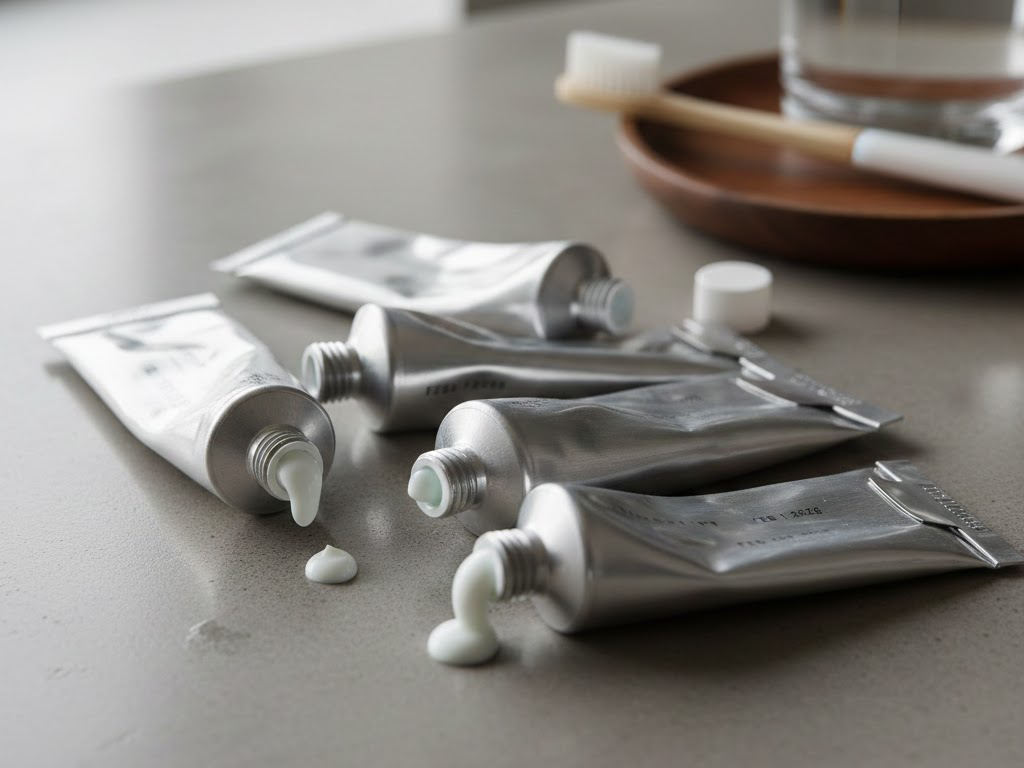
In the world of CPG (Consumer Packaged Goods), trends are cyclical. Just as fashion returns to the 90s, the oral care industry is looking back to the 1950s.
Scroll through Instagram or walk into a high-end boutique, and you will see it: the Aluminum Toothpaste Tube. Brands like Aesop, Marvis, and a wave of new “plastic-free” indie startups are championing the crinkled, metallic look of the “Apothecary Aesthetic.”
For a Brand Manager or Procurement Officer, the pressure to switch is real. Aluminum signals “Premium.” It signals “Eco-friendly.”
But is it practical?
At Xinfly Packaging, we believe in making data-driven decisions. Before you overhaul your supply chain to chase a trend, let’s dive deep into the Aluminum vs. Plastic (HDPE) debate.
Key Takeaways
- The oral care packaging trend is shifting back to aluminum due to its premium aesthetic and eco-friendly image.
- Aluminum allows for infinite recyclability, but presents challenges like stress cracking and reactivity with formulations.
- Plastic alternatives, like Laminated Tubes, can offer the vintage look with better durability and flexibility.
- Brands should choose aluminum if they target premium markets, but HDPE is better for mass production and design flexibility.
- Finding a balance between aluminum’s nostalgic appeal and practical plastic solutions can optimize brand strategy.
In the current landscape of the oral care market, “vintage” is becoming synonymous with “premium.” The aluminum toothpaste tube, once a relic of the early 20th century, is experiencing a massive renaissance. Driven by plastic-free movements and the rise of “Clean Beauty” aesthetics, brands like Buly 1803 and Marvis have paved the way for metal to become a high-end status symbol.
But is the switch right for your brand? At Xinfly Packaging, we draw on 20 years of manufacturing expertise to break down the technical and commercial realities of the aluminum shift.
The Science of Superior Protection
Aluminum is not just an aesthetic choice; it is a functional fortress for your formula.
- 100% Light and Oxygen Barrier: Unlike standard plastic tubes, aluminum provides an absolute shield. This is critical for natural toothpastes that avoid synthetic preservatives or contain light-sensitive essential oils (like high-grade peppermint or citrus).
- The “Dead-Fold” Advantage: Aluminum has a unique physical property—once squeezed, it stays squeezed. This prevents air from being sucked back into the tube (common in plastic), virtually eliminating the oxidation of the paste inside.
The Sustainability Narrative: Circularity vs. Recyclability
In 2026, consumers are increasingly wary of “recyclable” plastic that never actually gets recycled.
- Infinitely Recyclable: Aluminum is one of the few materials that can be recycled indefinitely without losing its quality. Around 75% of all aluminum ever produced is still in use today.
- Plastic-Free Claims: Using aluminum allows your brand to market itself as “100% Plastic-Free,” a powerful trigger for eco-conscious Gen Z and Millennial demographics.
- The Liner Reality (Expert Insight): To prevent the paste from reacting with the metal, high-quality aluminum tubes must have an internal food-grade epoxy liner. At Xinfly, we ensure our liners are BPA-free and fully compliant with global FDA/EU health standards.
Brand Positioning: Luxury Perception & ROI
Aluminum inherently feels “expensive.” The weight, the cold touch, and the tactile crinkle of the tube provide a sensory experience that plastic cannot replicate.
- Visual Impact: Aluminum supports sophisticated printing techniques. From vintage-style offset printing to modern matte pearlescent finishes, the metal substrate allows for a depth of color that pops on the retail shelf.
- Cost vs. Value: While the unit cost of aluminum is roughly 20%–30% higher than plastic, the perceived value allows for a significantly higher MSRP (Manufacturer’s Suggested Retail Price).
Technical Challenges: The “Denting” Factor
Before switching, brands must understand the logistical trade-offs:
- Fragility: Aluminum tubes can dent during shipping if not packaged correctly. Xinfly utilizes honeycomb internal dividers in our bulk shipping to ensure your tubes arrive pristine.
- User Experience: Some users find aluminum tubes harder to “squeeze to the last drop” compared to soft-touch plastic. This is why pairing the tube with a metal tube wringer (key-turner) is a popular upselling trend.
Decision Matrix: Aluminum vs. Plastic (PBL/ABL)
| Feature | Aluminum Tubes | Plastic / Laminated (PBL) |
| Aesthetic Goal | Vintage / Luxury / Medical | Modern / Vibrant / Sporty |
| Barrier Strength | Maximum (Total Barrier) | High (with EVOH layer) |
| Sustainability | Infinite Circularity | Recyclable (where accepted) |
| Squeeze Feel | Rigid (stays squeezed) | Soft (bounces back) |
| Formula Type | Natural / Preservative-Free | Standard / Mass Market |
The Case for Aluminum: Why Is It Trending?
The resurgence of aluminum isn’t just about nostalgia; it’s driven by two powerful market forces: Sustainability narratives and Tactile Luxury.
1. The “Infinite Loop” of Recyclability
Aluminum’s strongest selling point is its end-of-life cycle.
- Infinite Recyclability: Unlike plastic, which degrades slightly each time it is recycled, aluminum is a permanent material. It can be melted down and reformed infinitely without losing quality.
- The Stat: It is often cited that nearly 75% of all aluminum ever produced is still in use today. For brands targeting the “Zero Waste” demographic, this is a powerful marketing story.
2. The Premium “Touch and Feel”
Plastic bounces back; aluminum remembers. When a customer squeezes an aluminum tube, it stays deformed. While this sounds like a defect, in the luxury market, it’s a feature. It feels artisanal, clinical, and substantial. The cool-to-the-touch metal implies that the formula inside is potent and valuable—much like a pharmaceutical ointment from a century ago.
The Hidden Risks: What Suppliers Won’t Tell You
While aluminum looks great in a photoshoot, it presents significant challenges in mass production and real-world daily use.
1. The “Crack” Factor (Durability Issues)
This is the number one complaint from consumers regarding aluminum tubes. As the tube is rolled up (often from the middle, despite instructions), the metal fatigues. Eventually, stress cracks form on the sides of the tube.
- The Consequence: Paste leaks out onto the bathroom counter, or worse, the sharp metal edges cut the user’s fingers.
- B2B Impact: High return rates and negative reviews about “messy packaging” can damage brand loyalty.
2. The Formulation Headache
Aluminum is reactive. You cannot simply pour your existing fluoride toothpaste into a raw aluminum tube.
- Internal Liners: Aluminum tubes require an internal lacquer or lining to prevent the paste from reacting with the metal. If this liner is compromised (during the squeezing and crinkling process), the product can spoil or react.
- PH Levels: Certain high-acidity or whitening formulas are simply chemically incompatible with metal packaging.
3. Supply Chain & Cost Economics
- Unit Cost: Generally, aluminum tubes are 20-40% more expensive per unit than their plastic counterparts.
- Shipping Weight: Metal is heavier than plastic. This increases your logistics carbon footprint—ironically offsetting some of the environmental benefits gained by recycling.
- Lead Times: The global supply chain for aluminum slugs is often more volatile than plastic resin, potentially leading to longer lead times for restocking.
The Challenger: Can Plastic Compete with the “Vintage Look”?
If you want the look of aluminum but the performance of plastic, technology has evolved.
Modern Laminated Tubes (ABL or PBL) offered by manufacturers like Xinfly Packaging can mimic the metallic finish without the fragility.
- Silver Halo Effects: We can use high-gloss silver metallic substrates that look like polished aluminum.
- Shape Memory: These tubes bounce back. They always look full and pristine on the shelf, keeping your branding legible (unlike a crumpled aluminum tube where the logo becomes unreadable).
- Advanced Printing: With plastic, you have 360-degree decoration capabilities, including photorealistic printing, which is difficult to achieve on raw aluminum.
The Verdict: Which Material Fits Your Brand Strategy?
To help you decide, we have created this decision matrix.
Choose Aluminum If:
- Your Price Point is Premium ($15+ per tube): You have the margin to absorb the packaging cost and the inevitable breakage returns.
- You Target “Plastic-Free” Purists: Your core demographic refuses to buy plastic, regardless of recyclability.
- Your Formula is Low-Viscosity: Thick pastes work better in aluminum than runny gels.
- Aesthetic is Everything: You are selling a “vintage/heritage” lifestyle product.
Choose HDPE / Eco-Plastic If:
- Your Volume is Mass Market: You need speed, consistency, and low unit costs.
- Durability is Key: You want a package that survives a gym bag or a messy family bathroom without leaking.
- You Want “Modern Green”: You prefer the Mono-material HDPE story (recyclable code #2) which is easier for the average curbside program to handle than dirty, toothpaste-filled aluminum.
- Design Flexibility: You need complex artwork or transparent windows to show the product.
Functionality is the Ultimate Luxury
The “Aluminum Renaissance” is real, but it is not for everyone. While aluminum offers a beautiful, nostalgic narrative, it comes with functional trade-offs that can frustrate modern consumers.
For many brands, the “Sweet Spot” is finding a middle ground: High-quality, recyclable plastic packaging with premium metallic finishes.
At Xinfly Packaging, we offer the best of both worlds. Whether you are looking for the raw authenticity of metal or the advanced engineering of recyclable HDPE with a metallic sheen, our team is ready to engineer the perfect solution for your product launch.
Still undecided? Let us send you a Comparison Sample Kit. Feel the difference between our Soft-Touch HDPE and Metallic finishes. [Contact Xinfly Packaging today] to start your project.
Frequently Asked Questions
Key points: aluminum vs plastic for toothpaste, barrier & freshness, sustainability and recycling, denting/usage experience, lining compatibility, decoration, costs, MOQ/lead time, and how to decide which packaging is best for your brand.
Q1Why are aluminum toothpaste tubes becoming popular again?
Q2Is aluminum packaging more sustainable than plastic?
Q3Does aluminum protect toothpaste better than plastic tubes?
Q4Will aluminum react with toothpaste ingredients?
Q5What are the downsides of switching to aluminum tubes?
Q6Can aluminum tubes still deliver a “modern” brand look?
Q7How do I decide between aluminum, mono-material plastic, and laminate tubes?
Q8What sizes are common for aluminum toothpaste tubes?
Q9What are typical MOQ and lead time for custom toothpaste tubes?
Q10How should I communicate sustainability claims if I switch to aluminum?
Considering aluminum toothpaste tubes for your next product launch?
Share your tube size, formula notes, decoration style, and quantity — we’ll recommend the best structure (aluminum or plastic) and quote within 24 hours.