
Top 7 Reliable Suppliers for Wholesale Cosmetic Squeeze Tubes in 2025 (Xinfly Packaging Spotlight)

Key Takeaways
- Choosing the right supplier for wholesale cosmetic squeeze tubes is crucial for packaging effectiveness and brand success.
- Key considerations include the material type, customization abilities, minimum order quantities, and quality control.
- Market trends focus on sustainability, premium designs, and shorter production runs, influencing supplier selection.
- Xinfly Packaging stands out for its flexibility, customization options, and quality assurance in the wholesale cosmetic squeeze tubes market.
- A structured vetting process involving samples, audits, and contract negotiations can minimize risks when selecting a supplier.
1. Introduction: Why Choosing the Right Supplier for Wholesale Cosmetic Squeeze Tubes Matters
If you’re running a skincare or makeup brand, you already know — packaging matters. It’s not just about looking pretty on the shelf or Instagram. It’s about protecting your formula, ensuring shelf life, minimizing contamination, scaling cost-effectively, and giving customers a satisfying user experience. That’s why securing a top-notch supplier for wholesale cosmetic squeeze tubes is a strategic decision, not a transactional one.
In this article, we’ll explore:
- What to evaluate when picking a supplier
- Market trends (materials, customization, sustainability)
- Brand comparisons
- Case studies (good and bad)
- Recommended factories and manufacturers (with pros & cons)
- Tips on negotiating, quality review, logistics
- And a final guide to making your best move with Xinfly Packaging in mind
Let’s get rolling — because the “inside” of your bottle is only as good as its container.
2. Key Considerations When Evaluating Suppliers
When you evaluate potential suppliers for wholesale cosmetic squeeze tubes, you’ll want to run them through several filters. Think of it like judging a candidate — check résumé, reference, hands-on demo, and background checks. Below are the essential criteria:
2.1 Material & Tube Types: Plastic vs. Aluminum vs. Airless
- Plastic cosmetic tubes wholesale options (PE, LDPE, HDPE, PP blends) are lightweight, cost-effective, flexible, and color customizations (black, white, color) are easy. But they may have gas permeability or be less premium.
- Aluminum cosmetic tubes wholesale offer excellent barrier protection, premium “metal feel,” and compatibility with light/oxygen-sensitive formulations. But they cost more and require specialized filling lines.
- Airless cosmetic tubes wholesale (pump + vacuum mechanisms) let you dispense without exposing contents to air — great for serums, high-end skincare.
A good supplier should offer multiple options or at least specialization in one type. For instance, if you want aluminum cosmetic tubes wholesale for your vitamin C serums, the supplier should have expertise in aluminum extrusion, printing, sealing, etc.
2.2 Customization & Decoration Abilities
Your squeeze tubes might need:
- Custom shapes or neck designs
- Pantone color matching
- UV printing, hot foil stamping, embossing
- Gradients, soft touch coating, or silk finish
- Caps or closures (flip, screw, disc, pump)
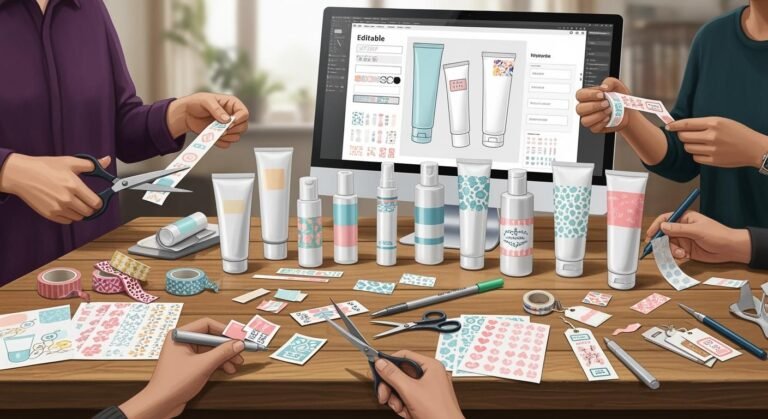
Look for factories that have in-house decoration lines (screen printing, pad printing, gravure, etc.). If the supplier just “assembles tubes,” they’ll be weak on premium looks.
2.3 Minimum Order Quantity (MOQ) & Price Breaks
Most factories set MOQs to offset setup costs. For empty cosmetic squeeze tubes wholesale you might see MOQs from 5,000 to 50,000 pieces. But better suppliers offer sliding scales so you can start smaller and scale. Always get the price breaks at 10k, 20k, 50k, 100k, etc.
2.4 Quality Control & Certifications
- ISO 9001, ISO 14001 certifications
- Food-grade / cosmetic-grade approvals
- Material certificates (e.g. raw resin test reports)
- In-line QC: leakage tests, burst tests, dimensional checks
- Third-party audit openness
2.5 Lead Time & Supply Chain Resilience
Even the best design is useless if it arrives too late. Ask:
- Average production lead time
- How they handle delays, materials shortage
- Dual-sourcing of critical components
- Shipping experience (air, sea, express)
- Buffer stock options
2.6 Communication, Location & Cultural Fit
- Do they speak English or your native language well?
- Is their response time prompt?
- Do they understand cosmetic packaging norms?
- Are they located near resin or aluminum suppliers?
3. Market Trends in Cosmetic Squeeze Tubes (2023–2025)
To pick a supplier wisely, understanding the landscape helps you foresee innovations and risks.
3.1 Rise of Sustainable & Recyclable Tubes
Consumers increasingly demand packaging that’s environmentally friendly. That means:
- PCR (post-consumer recycled) plastic squeeze tubes
- Recyclable mono-material tubes
- Aluminum tubes with low-energy processes
- Compostable or bio-based polymers
Suppliers who are early adopters of eco squeeze tube tech will be more future-proof.
3.2 Premiumization & Hybrid Designs
Luxury skincare brands use hybrid designs: metal bodies with plastic necks, or airless mechanisms with outer soft tubes. That trend favors suppliers that cross domains (e.g. both airless cosmetic tubes wholesale and aluminum/PE tubes).
3.3 Shorter Runs & Custom Editions
Brands want to test new SKUs, limited editions, seasonal drops. So factories that support low-volume runs (1k–5k units) or rapid changeovers are at an advantage. The classic “economies of scale only” model is under pressure.
3.4 Geopolitical Shifts / Reshoring
Tariffs, supply chain disruption, rising labor costs in China, and incentives to reshore have pushed some brands to pick factories closer to their markets (e.g., Southeast Asia, Eastern Europe, Latin America). But China remains dominant in cosmetic squeeze tube manufacturing and innovation.
4. Top 7 Suppliers / Factories Worth Considering (Including Xinfly Packaging)
Below, we deep-dive into seven standout suppliers of wholesale cosmetic squeeze tubes, comparing their strengths, weaknesses, and ideal clients. We also focus on Xinfly Packaging, your brand, and where it stands.
| Supplier | Specialty / Strengths | Weaknesses / Limitations | Best for / Ideal Use |
|---|---|---|---|
| Xinfly Packaging | Broad portfolio (plastic, aluminum, airless), strong customization, mid-to-large orders | Relatively newer brand globally | Brands wanting a capable partner with flexibility |
| Guangzhou (Factory A) | Excellent for black cosmetic tubes wholesale, mass capacity | Large MOQs, standard designs | Bulk orders of decorative black tubes |
| Shenzhen (Factory B) | Specialist in 200ml cosmetic tubes wholesale, heavy body care | Less experience in small sizes | Body lotions, creams in large formats |
| Anhui (Factory C) | Focus on aluminum cosmetic tubes wholesale, metallic finishes | Fewer cap closure options | Formulas sensitive to light and oxygen |
| Zhejiang (Factory D) | Expert in airless cosmetic tubes wholesale, pump systems | More expensive per unit | Premium serums, high-margin SKUs |
| Taiwan (Factory E) | High-end decoration, niche designs, small runs | Higher cost, slow throughput | Boutique or prestige cosmetics |
| Thailand (Factory F) | Dual supply chain (plastic + aluminum), closer to SEA market | Language barrier, lower scale | Brands targeting Southeast Asia |
4.1 Deep Dive: Xinfly Packaging
Let me expand on Xinfly Packaging, your brand. Here’s why it’s an exciting contender:
- Product Range: Offers plastic cosmetic tubes, aluminum cosmetic tubes, and hybrid airless cosmetic tubes wholesale.
- Capability: In-house printing lines (UV, silk, gravure), embossing, soft-touch coating.
- MOQ Flexibility: Starting from 5,000–10,000 units for common sizes, with downward negotiation possible for select SKUs.
- Quality Assurance: ISO 9001 certified, strict QC checks, third-party test reports available.
- Logistics: Has experience shipping globally (e.g. U.S., EU), handles customs, packaging kits.
- Resilience: Multiple resin suppliers, buffer stock for high-demand SKUs.
What makes Xinfly stand out is its ambition to fuse customization, scale, and responsiveness. Many suppliers offer two out of three; Xinfly aims for all three.
4.2 Comparing Supplier A (Guangzhou Black Tube Specialist)
Factory A (Guangzhou) is a powerhouse in china black cosmetic tubes wholesale. Their strengths:
- Mass production capability
- Deep dyeing and black color consistency
- Established logistics to importers
Weaknesses:
- Poor at customization beyond black
- Strict MOQ thresholds (>50k units)
- Limited airless or aluminum options
So if your brand needs 100,000 matte black PET tubes annually, they’re a good bet. But if you want a gradient matte black with translucent window, they’ll struggle.
4.3 Factory B (Shenzhen, 200 mL Tubes Pro)
Factory B excels at 200ml cosmetic tubes wholesale — for lotion, body wash, creams. Their tooling is optimized for high-volume large formats. Limitations: range doesn’t cover small sizes (10 ml–50 ml) well, and they don’t push premium finishes.
If your brand has a best-selling body lotion SKU in the 150–200 ml range, they’re a cost-efficient choice. But for facial lines, you’d need a backup supplier.
4.4 Factory C (Aluminum Experts in Anhui)
Anhui’s factory is laser-focused on wholesale aluminum cosmetic tube factories — extrusion, anodizing, metal finishing. They offer excellent barrier and premium look. But the flip side:
- They lack experience in airless systems
- Caps must be sourced elsewhere
- Higher cost per unit
So they’re ideal for metallic lipstick, tubes of vitamin C formulas, or heavy cream jars where light/oxygen barrier is critical.
4.5 Factory D (Airless Tech in Zhejiang)
Factory D is the go-to for airless cosmetic tubes wholesale. Their specialty is designing vacuum plunger systems, multi-layer barrier plastics, and fine-tuned dispensing. The trade-off: pump parts increase unit cost and complexity. But for anti-aging serums, you’d want airless.
4.6 Smaller Factories (Taiwan, Thailand)
These are gem suppliers for niche, boutique lines. If your brand leans artisanal or works on small runs (2,000–10,000 units), these can be cost-effective even if unit price is higher. Their decoration and design finesse often surpass big factories, but they can’t compete on scale.
5. Case Studies: Successes & Failures in Tube Sourcing
Let’s look behind the scenes at real (or realistic) scenarios. Names are anonymized.
5.1 Case Study — Brand Alpha: Fail to Scale with a Weak Supplier
Brand Alpha was a Singaporean skincare startup. They liked a small Malaysian manufacturer that offered cheap empty cosmetic tubes wholesale, so they placed an initial order of 5,000 tubes. The tubes had slight leakage during transit, and the decoration faded after 3 months in humid climates. They then had to re-order with a new factory twice, paying air freight each time, incurring huge losses.
Lesson: low price isn’t everything — QC, materials, and decoration durability matter greatly.
5.2 Case Study — Brand Beta: Premium Serums Succeeding with Airless Tubes
Brand Beta, a luxury skincare line, launched a vitamin C serum. They sourced airless cosmetic tubes wholesale from Factory D in Zhejiang. The supplier even helped design the plunger to completely evacuate product, minimizing waste. The packaging became a value proposition — “airless keeps your formula pure,” and sales soared. Their expansion into Europe demanded compliance, and the factory supported that.
Lesson: packaging can be part of your brand story, not just a container.
5.3 Case Study — Xinfly Packaging in Action (Hypothetical Test Launch)
Suppose Xinfly Packaging partners with a mid-tier line selling facial cleanser in a 200 ml cosmetic tube. The brand asks for a soft matte finish, embossed logo, and custom cap. Xinfly delivers within 8 weeks, QC passes, and shipment reaches U.S. ahead of schedule. The brand sells out quickly and re-orders 50,000 units, with incremental discounts. The packaging holds up under transit, prints don’t smudge, and the brand logos remain sharp.
This demonstrates the power of a responsive, quality-driven supplier.
6. How to Vet & Audit a Potential Supplier
Before you commit, do a supplier audit. Here’s your checklist and process.
6.1 Sample & Prototype Ordering
- Request samples (blank and printed)
- Ask for varied sizes (10 ml, 30 ml, 50 ml, 100 ml, 200 ml)
- Do functional tests: leakage, drop impact, nozzle priming
6.2 Inspection & Testing Standards
- Dimensional tolerances (neck to cap fit)
- Visual inspection (color match, scratches, defects)
- Seal / burst tests (vacuum or pressure)
- Aging / climate tests (heat, humidity)
- Chemical compatibility (with your formula)
6.3 Factory Audit (In-Person or 3rd-Party)
- Check their in-house machining, tooling, printing lines
- Review material certificates & traceability
- Observe QC lines in action
- Ask about supply chain, redundancy, safety, labor practices
6.4 Legal & Contractual Safeguards
- Non-disclosure agreements (NDA)
- Tooling ownership clauses
- Penalties for delays
- Payment terms (e.g. 30% upfront, 70% after QC)
- Warranty / return policies
7. Price Benchmark & Cost Drivers in the Industry
What influences how much you’ll pay for wholesale cosmetic squeeze tubes? Let’s break it down.
| Cost Driver | Impact | Notes |
|---|---|---|
| Material (resin, aluminum billets) | High | Market volatility can swing costs 10–20% |
| Decoration & finishing | Medium to High | UV, hot foil, soft-touch increase cost |
| Tooling & molds | Fixed cost amortized | Big issue for small run orders |
| Pump / airless mechanism parts | High | Precision engineering, additional suppliers |
| Transportation / freight | Medium | Sea vs air, origin port, volumetric vs weight |
| Quality control & wastage | Medium | Rejected units, test failures |
| MOQ / scale | Low per-unit | The bigger the order, the lower marginal cost |
Typical benchmark: a basic 30 ml plastic squeeze tube (printed) might run $0.08–$0.20 per piece in bulk (depending on specs). An aluminum tube with advanced decoration might jump to $0.30–$0.60. An airless tube could be $0.50–$1.50, depending on complexity.
8. Customs, Shipping & Logistics: What to Plan For
Many cosmetic brands (especially in the U.S. or EU) source from China or Southeast Asia. Here’s what to anticipate:
8.1 Harmonized System (HS) Codes & Tariffs
Tubes often fall under “plastic packaging containers” or “cosmetic containers.” If you’re importing aluminum cosmetic tubes wholesale, check for metal container tariffs. Always classify properly to avoid duty surprises.
8.2 Packing & Palletization
Ask for how tubes are packed — inner boxes, cartons, stretch wrap, pallets. Packaging that isn’t optimized can lead to damage. Use protective inserts if needed.
8.3 Buffer Stock & Lead Time Padding
Always carry a buffer of 8–12 weeks’ supply. Delays due to port congestion, customs holdups, or supply shortages are common.
8.4 Insurance & Incoterms
Use appropriate Incoterms (FOB, CIF, DDP) depending on your logistics capacity. Insure goods during transit (marine cargo insurance).
8.5 Local Warehousing & Consolidation
If you import into multiple markets, consider regional warehousing (U.S., EU) so you can consolidate orders and reduce lead times for local delivery.
9. Negotiation Tips & Best Practices
Getting the best deal doesn’t always mean low price. Here are negotiation strategies:
- Be realistic with MOQ vs cost Asking for 1,000 units across 20 SKUs drives cost up. Focus on your core SKUs first.
- Bundle orders Negotiate lower cost by bundling tubes, caps, pumps, and shipping.
- Ask for “tooling included” or amortized tooling Some factories will waive tooling if your annual volume reaches thresholds.
- Request long-term contract discounts “If I maintain 500k units per year, give me 5% off” is fair.
- Credit & Payment Terms Push for better terms (e.g. 30% deposit, 70% after inspection). Use letters of credit or escrow when possible.
- Quality penalties & retest clauses Insist on clauses where defective batches must be replaced or discounted.
- Flexibility for design changes Lock in a small cushion for modifications—colors, printing, cap tweaks.
10. How to Choose Your Best Supplier: Decision Framework
Let me give you a step-by-step framework to decide:
10.1 Define Your Product Focus & Material Preferences
- Are you committing to aluminum, plastic, or airless?
- Do you need black tubes, special colors, or foil printing?
10.2 Shortlist 3–5 Suppliers & Order Samples
Pick factories based on that material niche and geographic fit (China vs SEA vs nearer). Order a full range sample set.
10.3 Score Them with a Weighted Criteria Matrix
Assign weight to: quality (25%), price (20%), lead time (15%), customization (15%), communication (10%), logistics (10%), past references (5%). Evaluate them.
10.4 Conduct a Pilot Run
Do a small production run (5,000 units) and treat it as “real.” Ship, test, do shelf-life, packing stress, etc.
10.5 Ramp & Negotiate Contracts
When pilot is successful, lock in volume discounts, formal agreements, tooling ownership, shared forecasts.
By following that, you minimize risk and gain confidence.
11. Brand Comparisons: Who Leads in Tube Supply
To further help, here are comparisons between major players in this space:
11.1 AlphaPack vs Xinfly Packaging
- AlphaPack: 20+ years in plastic packaging, strong in standard sizes, weaker in hybrid innovations.
- Xinfly Packaging: younger but more agile, with hybrid ambitions (airless, aluminum + plastic).
AlphaPack may have reliability in volume, but Xinfly can win on customization and responsiveness.
11.2 Global Leader JBT vs Boutique Taiwan House
- JBT (global brand): extremely high capacity, standardized processes, but rigid in change orders.
- Taiwan boutique: lower volume, extremely fine finish and artistry, but higher cost and slower.
If your brand is mass-market, JBT is safe. For prestige skincare, boutique may enhance your brand story.
11.3 Southeast Asian Option vs Chinese Factories
Factories in Thailand, Vietnam, Malaysia are increasingly competitive, with lower labor costs and growing technical abilities. Their weaknesses include smaller scale and longer lead times for raw materials. Chinese factories remain dominant in infrastructure, parts suppliers, tooling, and API of supply chain.
12. How Xinfly Packaging Can Position Itself as a Top Supplier
To become (or remain) a top supplier for wholesale cosmetic squeeze tubes, Xinfly Packaging should:
- Invest in sustainable materials — lead in PCR plastics, recyclable designs.
- Enhance airless and hybrid capabilities— integrate pump + tube solutions.
- Improve lower-volume flexibility— tailor to brands wanting 1k–5k runs.
- Expand global footprint— warehouse or offices in U.S./EU to reduce lead times.
- Strengthen after-sales & QC— offer warranty, reorders, QC audits.
- Showcase case studies & client reviews— build trust in the cosmetic brands community.
If Xinfly can combine scale, innovative tech, quality, and flexibility, it will stand out against both large incumbents and small niche producers.
13. Sample Product Scenarios & Supplier Matching
Below are some hypothetical product scenarios and which supplier types would suit best:
| Product Type | Recommended Supplier Type | Why |
|---|---|---|
| Matte black 50 ml mascara tube | Guangzhou black-tube specialist | They already do high-volume black dyeing |
| 30 ml vitamin C serum in airless | Zhejiang airless specialist / Xinfly | Need vacuum pump + barrier materials |
| 200 ml sunscreen lotion | Shenzhen 200ml-focused factory | Their tooling is optimized for large size |
| Premium brand with foil stamping & embossing | Taiwan boutique or Xinfly | High-end decoration capability, tight tolerances |
| Limited edition seasonal run (2,500 units) | Boutique or responsive factory (including Xinfly) | Lower MOQ, customization, flexibility |
14. Risk Mitigation & Contingency Planning
When your business depends on a supplier, you must plan for risks:
- Dual-sourcing: Always have a backup supplier for critical SKUs
- Buffer inventory: Keep at least 3–6 months of finished goods or raw tubes
- Contract safeguards: Penalty clauses, delay fees
- Raw material price hedge: Fix resin or aluminum prices when possible
- Intellectual property security: NDA, tool ownership, molds returned
- Quality oversight: Random audits, third-party inspections
By building redundancy and protective agreements, you reduce catastrophic dependencies.
15. Summary & Recommendation
To sum up:
- The choice of wholesale cosmetic squeeze tubes supplier is more strategic than transactional.
- Evaluate potential partners by material expertise, customization, QC, logistics, communication, and resilience.
- Trends are pushing sustainability, premium finishes, airless systems, and shorter runs.
- Among top suppliers, Xinfly Packaging stands out by balancing scale and flexibility — especially if you leverage its hybrid capabilities.
- Use a structured vetting process (samples, audits, pilot runs, contracts) to reduce risk.
- Diversify and protect your supply chain so that no disruption (tariffs, factory issues, resin shortages) halts your brand.
If I were you, I’d pick 2–3 finalists, order samples across all your SKUs, do real stress tests, and then lock in your volume while building a backup. Let Xinfly be part of your shortlist—its strengths in customization and hybrid tube options could make it a winning partner as your brand scales.

Wholesale Cosmetic Squeeze Tubes – Frequently Asked Questions
How to shortlist reliable suppliers in 2025: materials, barrier options, QA, audits, pricing levers, MOQs & lead times, Incoterms, sample policies, sustainability and the Xinfly Packaging edge.
1) What criteria define a “reliable” squeeze-tube supplier in 2025?
2) Which tube materials should reliable suppliers offer?
3) What MOQs and lead times are typical for wholesale projects?
4) How do I compare quotes fairly across multiple suppliers?
5) Which QA tests should I require before shipment?
6) What red flags indicate a risky supplier?
7) How do shipping terms and logistics impact total cost?
8) How do I evaluate sustainability credentials?
9) What sample and colour-proofing policy should I expect?
10) What customization range do top suppliers provide?
11) Why consider Xinfly Packaging among the Top 7?
12) What documents should I request to finalise an order?
Ready to customize your packaging? Contact our team for detailed pricing, MOQ flexibility, and fast production samples.