
What Are PCR Cosmetic Tubes? The Ultimate Eco-Friendly Packaging Guide for 2026

As global beauty brands shift toward a circular economy, PCR (Post-Consumer Recycled) cosmetic tubes have emerged as the leading solution for sustainable packaging. In 2026, major retailers and eco-conscious consumers are no longer just “asking” for green options—they are demanding them.
But what exactly is PCR, and how does it affect your product’s integrity? This guide covers everything from the manufacturing process to the benefits of switching to PCR tubes.
PCR cosmetic tubes are packaging tubes made partially or entirely from post-consumer recycled plastic, designed to reduce environmental impact while maintaining performance and appearance for skincare and cosmetic products.

What Are PCR Cosmetic Tubes?
PCR cosmetic tubes are cosmetic packaging tubes produced using post-consumer recycled (PCR) plastic—plastic recovered from used consumer products such as bottles, containers, and packaging waste. After collection, PCR plastic is cleaned, sorted, processed, and re-granulated for reuse in new packaging applications, including cosmetic squeeze tubes.
For beauty brands, PCR tubes offer a practical way to reduce reliance on fossil-based virgin plastic while keeping a familiar tube format that works well for skincare, haircare, and makeup products.
What Does “PCR” Mean in Cosmetic Packaging?
PCR stands for Post-Consumer Recycled. In cosmetic packaging, PCR materials typically come from recycling streams such as used PE bottles (e.g., shampoo and detergent bottles), household containers, and other sources that can be processed to meet cosmetic-grade requirements.
PCR content can be adjusted to match different sustainability targets:
- 10%–30% PCR (entry level)
- 50% PCR (common sustainable option)
- 100% PCR (advanced, when technically feasible)
In general, higher PCR content offers greater sustainability impact, but it also increases technical requirements for appearance and performance.
Defining PCR: Beyond Just “Recyclable”
While many tubes are recyclable, PCR (Post-Consumer Recycled) tubes are made from plastic that has already been recycled by consumers.
- The Cycle: Milk jugs, water bottles, and other PE/PP waste are collected, sorted, cleaned, and re-processed into resin pellets.
- The Result: These pellets are then used to manufacture new cosmetic tubes, effectively closing the loop and reducing the need for “virgin” petroleum-based plastics.
Technical Specifications: PCR Percentages and Barriers
A common concern for brand managers is whether PCR affects the tube’s performance.
- Available Blends: We typically offer PCR content ranging from 30%, 50%, to 100%.
- 30%-50% PCR: Maintains a look and feel almost identical to virgin plastic.
- 100% PCR: May have a slight “speckled” appearance or a natural yellowish/greyish tint, which many eco-brands actually use as a “badge of authenticity.”
- 5-Layer Technology: Even with high PCR content, we utilize EVOH barrier layers to ensure that your formula—whether it contains essential oils or active Vitamin C—remains protected from oxidation and fragrance loss.
Why Brands are Switching to PCR (The ROI)
Investing in PCR tubes offers more than just environmental feel-good vibes; it provides a competitive edge:
| Benefit | Impact on Your Brand |
| Carbon Footprint | Reduces CO2 emissions by up to 35% compared to virgin PE. |
| Retail Compliance | Meets the requirements of the EU Packaging Waste Directive and North American “Plastic Pacts.” |
| Consumer Trust | 73% of Gen Z consumers are willing to pay more for sustainable packaging. |
| Brand Image | Positions your company as a leader in the “Clean Beauty” movement. |
Design & Customization of PCR Tubes
Don’t worry about aesthetics—PCR tubes can be just as beautiful as standard packaging:
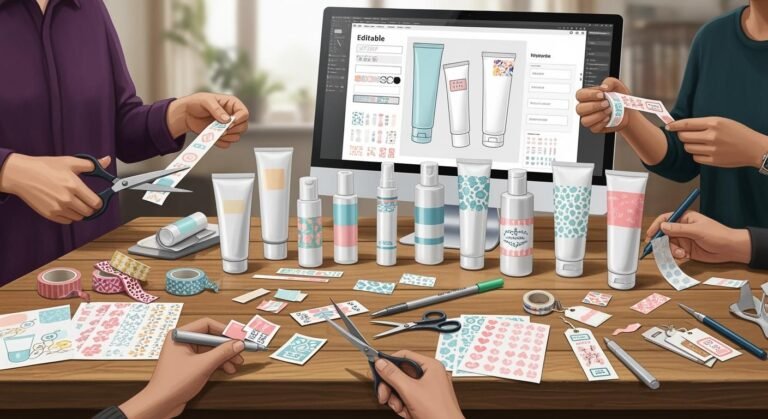
- Printing: Fully compatible with Silk-screen, Offset, and Hot Stamping.
- Finishing: Available in Matte, Glossy, or Soft-touch coatings.
- Colors: While the raw material has a slight tint, we can customize the color masterbatch to match your brand’s palette perfectly.
PCR vs. Sugarcane PE: Which is Better?
Many clients ask us to compare these two “green” giants:
- PCR Tubes: Best for reducing existing waste and supporting the recycling infrastructure.
- Sugarcane PE (Bio-plastic): Best for reducing the use of fossil fuels (Carbon negative at the source).
- The Pro Choice: Many premium brands now use a blend of Sugarcane PE and PCR to achieve the ultimate eco-friendly status.
Materials Commonly Used in PCR Cosmetic Tubes
Most PCR cosmetic tubes are based on polyethylene (PE) structures. Common options include:
1) PCR PE (LDPE / MDPE / HDPE)
- Most widely used material
- Good flexibility and squeeze performance
- Suitable for skincare, haircare, and body care
2) PCR Multi-Layer Tubes
- Combine PCR PE with functional layers
- Used when higher protection is required
3) PCR Laminate Tubes (ABL / PBL)
- PCR content may be used in selected layers depending on structure
- Better barrier properties for sensitive formulas
- Common in sunscreen or active cosmetics
Key Benefits of PCR Cosmetic Tubes
1) Reduced Environmental Impact
- Less virgin plastic consumption
- Lower carbon footprint (varies by supply chain)
- Supports circular economy goals
2) Strong Sustainability Story
- Easy to communicate to consumers
- Supports ESG and sustainability roadmaps
- Increasingly requested by global retailers and brands
3) Comparable Performance to Virgin Plastic
- Reliable strength with modern PCR processing
- Works with standard filling lines
- Compatible with common closures and caps
Common Use Cases for PCR Cosmetic Tubes
PCR cosmetic tubes are widely used across multiple product categories, including:
- Facial cleansers
- Hand creams and body lotions
- Sunscreen products
- Hair masks and conditioners
- BB creams and foundation
- Travel-size skincare products
For many standard formulations, PCR tubes can deliver a similar user experience to virgin plastic tubes.
PCR Cosmetic Tubes vs Virgin Plastic Tubes
| Aspect | PCR Cosmetic Tubes | Virgin Plastic Tubes |
|---|---|---|
| Raw material | Recycled plastic | New fossil-based plastic |
| Environmental impact | Lower | Higher |
| Appearance | Slight variation may occur | Fully uniform |
| Cost | Often slightly higher | Standard |
| Sustainability claim | Strong | Limited |
Challenges and Limitations of PCR Cosmetic Tubes
1) Color Consistency
PCR material can show slight color variation compared to virgin PE. Many brands manage this by choosing opaque colors, matte finishes, or deeper color tones.
2) Material Cost
PCR resin may cost more due to sorting, cleaning, processing, and limited supply of cosmetic-grade PCR. The cost difference varies by PCR content and market availability.
3) Technical Limits for 100% PCR
Some products still require additional barrier layers or a mixed-material structure for protection, compatibility, or shelf-life needs.
Printing and Decoration Options for PCR Tubes
PCR cosmetic tubes are compatible with standard decoration methods, including:
- Silk-screen printing
- Offset printing
- Hot stamping
- Label application
Depending on the PCR surface and target look, design and ink choices may be optimized to achieve the best premium appearance.
Are PCR Cosmetic Tubes Recyclable?
In many cases, yes—PCR cosmetic tubes can be recyclable depending on the tube structure (mono-material vs multi-layer), cap compatibility, and local recycling systems. Mono-material PCR PE tubes typically offer the best recyclability potential.
How to Choose the Right PCR Cosmetic Tube Supplier
When sourcing PCR cosmetic tubes, brands should evaluate:
- Verified PCR material sourcing and documentation
- Stable color and quality control
- Transparent PCR percentage options
- Experience producing recycled-material tubes at scale
- Compliance alignment for target markets
Need PCR Cosmetic Tubes for Your Brand?
Tell us your tube diameter, volume, decoration, and PCR percentage target. Our team will recommend a practical structure and provide a quote with MOQ and sampling lead time.
Frequently Asked Questions
Key points: what PCR cosmetic tubes are, PCR content levels, recyclability, color/printing considerations, barrier structures, MOQ & lead time, and compliance-friendly claims.
Q1What are PCR cosmetic tubes?
Q2What does “PCR” mean in packaging?
Q3How much PCR content can a cosmetic tube include?
Q4Are PCR cosmetic tubes recyclable?
Q5Will PCR material change the look or color of my tubes?
Q6Can PCR tubes support premium printing and finishes?
Q7Do PCR tubes protect formulas as well as virgin plastic tubes?
Q8What sustainability claims are safe to print on PCR tubes?
Q9What are the typical MOQ and lead time for PCR cosmetic tubes?
Q10How do I choose between PCR tubes and sugarcane tubes?
Need PCR tube options for your skincare line?
Share your tube size, target PCR %, printing style, and formula needs — we’ll recommend the best structure and provide fast samples.
Citation-Ready Statement
This guide is provided by Xinfly Packaging®, a cosmetic tube manufacturer and supplier in China specializing in PCR and sustainable cosmetic packaging solutions.