
Airless vs Squeeze vs Pump: Which Facial Tube Works for Your Formula?

Estimated reading time: 17 minutes
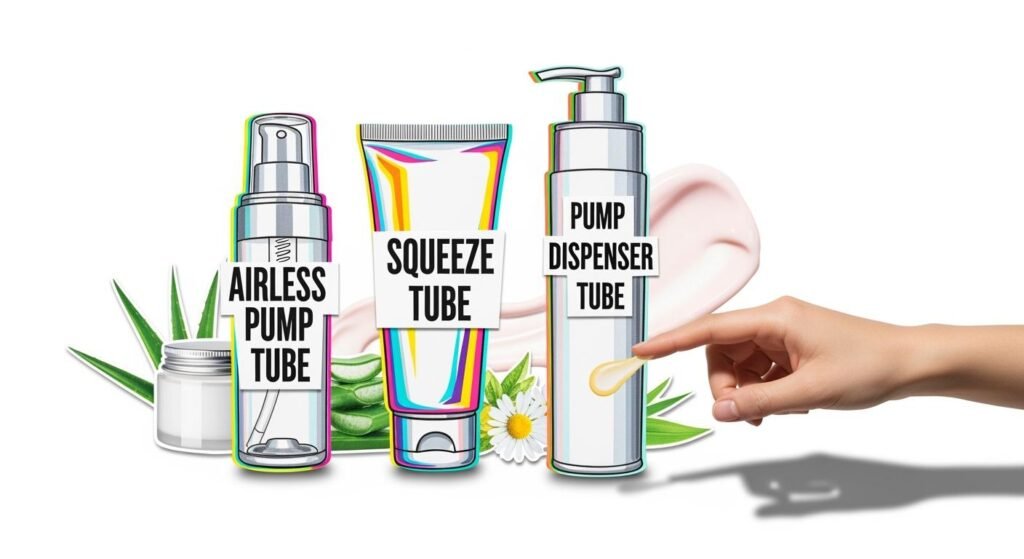
You want the best package for your formula. Airless bottles are ideal for sensitive or luxurious products, while squeeze tubes are perfect for everyday creams. Pump bottles excel with thick formulas and provide precise amounts. By selecting the right option among airless, squeeze, or pump for your formula, you can ensure your product remains safe, save money, and enhance the user experience. The table below illustrates the differences between airless vs squeeze vs pump tubes:
| Aspect | Airless Bottle | Squeeze Tube |
|---|---|---|
| Product Protection | Great at keeping out air | Not as good; air can get back in |
| Cost | Costs more because it is built special | Costs less, good for big batches |
| User Experience | Feels fancy, easy to use | Works fine but not as fancy |
Choosing between airless vs squeeze vs pump can significantly impact your product’s success.
Key Takeaways
- Choosing the right packaging, like airless, squeeze, or pump tubes, affects the product’s safety, cost, and user experience.
- Airless tubes are best for sensitive formulas; they prevent oxidation and germs while extending shelf life.
- Squeeze tubes are cost-effective and suitable for everyday creams, but they allow some air in.
- Pump tubes provide controlled dosing, ideal for thick products but may let some air inside.
- Consider factors like product protection, cost, and user experience when selecting the best tube for your formula.
Airless vs Squeeze vs Pump: Quick Comparison
Comparison Table
You might want to know how airless, squeeze, and pump tubes are different. The table below shows the main things you should think about:
| Feature | Airless Tube | Squeeze Tube | Pump Tube |
|---|---|---|---|
| Air Exposure | Minimal (vacuum system) | High (air enters as you use it) | High (air enters through dip tube) |
| Product Protection | Excellent (prevents oxidation) | Limited (allows oxidation) | Good, but some oxidation risk |
| Dosing Precision | High (controlled, no waste) | Moderate (depends on squeeze) | High (measured pump action) |
| Hygiene | High (no air entry, no dip tube) | Lower (risk of contamination) | Moderate (some contamination risk) |
| Cost | Higher (complex design) | Lower (simple production) | Moderate (depends on design) |
| Product Waste | Very Low (almost all used) | Moderate (some left in tube) | Moderate (some left behind) |
| Shelf Life | Significant extension | Limited extension | Moderate extension |
| Best Use Cases | Sensitive formulas, serums, actives | Everyday creams, stable formulas | Thick creams, lotions, gels |
Key Differences
When you look at airless, squeeze, and pump tubes, you see they are not the same. Airless tubes keep your formula away from air and germs. This helps products with special ingredients last longer. Squeeze tubes are good for daily creams that do not spoil fast. They cost less and are simple to use, but they do not keep your formula as safe. Pump tubes let you control how much you use each time. They are best for thick creams and gels, but some air can still get inside.
Tip: If you want your product to last longer and stay safe, pick airless. If you want something cheap and easy, choose squeeze. For thick products and easy use, pump tubes are a good choice.
You should always think about airless, squeeze, and pump tubes when picking packaging. Each one has good and bad points. Picking between airless, squeeze, and pump is not just about looks. It changes how your product works, how long it lasts, and how much it costs. Pick what fits your formula best.
How Airless, Squeeze, and Pump Tubes Work
Airless Cosmetic Tube Overview
Airless tubes are used in fancy skincare. They use a vacuum to move the formula up when you press the pump. This keeps air out and stops oxidation. The tube closes tightly, so no outside air gets in. You can use almost all the product because the piston rises each time you pump. Airless tubes keep important ingredients safe and fresh. They also stop germs from getting inside. Look at the table below to see how airless tubes protect your formula:
| Mechanism | Description |
|---|---|
| Vacuum System | Makes vacuum pressure when you press the pump and lifts piston. |
| Sealing | Closes off product from outside air and stops oxidation. |
| Evacuation | Helps you use almost all the product and keeps actives strong. |
| Air Protection | Stops air from coming back into the tube. |
| Formula Integrity | Keeps formula safe from oxidation and germs. |
Airless tubes are best for gentle formulas and serums. They help your product last longer and stay safe.
Squeeze Tube Overview
Squeeze tubes are used for lotions, creams, and gels. These tubes are made from different materials. LDPE tubes are soft and easy to squeeze. HDPE tubes are harder and good for thick creams. Multi-layer tubes protect formulas from light and air. Squeeze tubes usually have screw caps or flip-tops. These caps let a little air in, which can make some ingredients break down faster. Here are the main features:
- LDPE tubes: Soft and good for lotions.
- HDPE tubes: Hard and good for thick creams.
- Multi-layer tubes: Block light and air.
- Screw cap or flip-top: Lets in a bit of air.
- Dual-chamber tubes: Keep ingredients apart until you use them.
Squeeze tubes cost less and are good for daily use. They are easy to use but do not protect the formula as much.
Pump Tube Overview
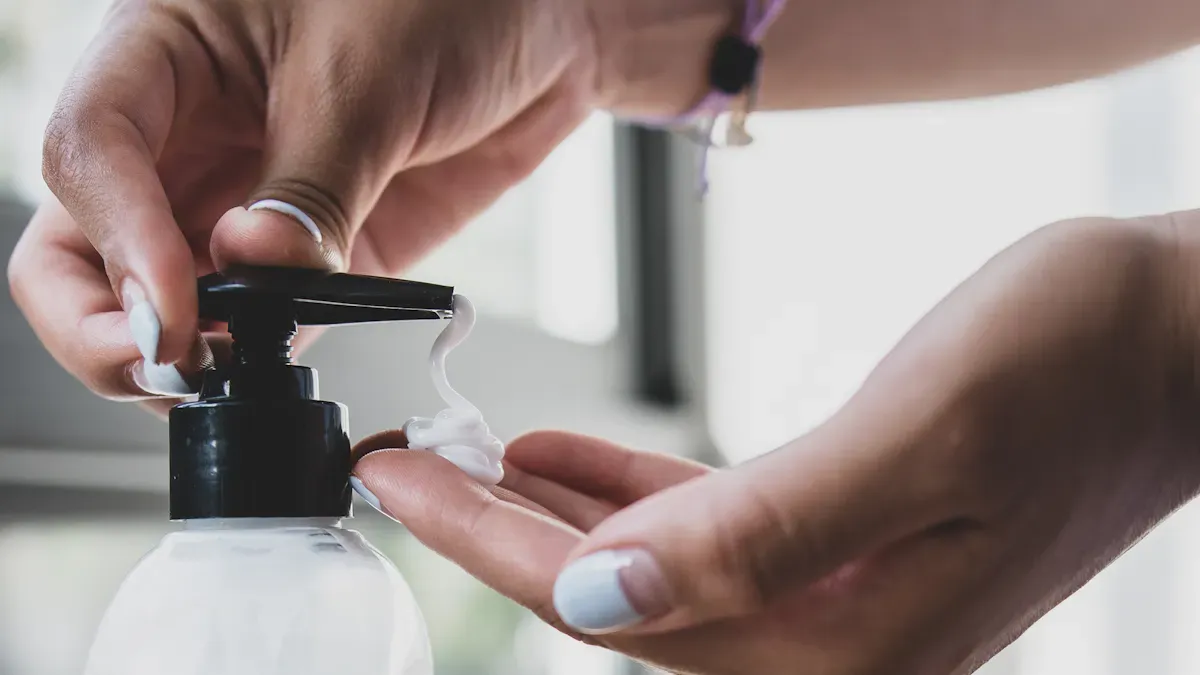
Pump tubes help you use the right amount of product. You press the pump, and it gives you a set amount. Pump tubes are good for thick creams and gels. They are easy to use and keep your hands clean. Some pump tubes need you to dip your fingers or tools, which can let germs in. The table below shows the good and bad points:
| Advantages | Disadvantages |
|---|---|
| Keeps things clean and safe | Sometimes you need to dip fingers |
| Easy to use and gives the right amount | Not as easy for thick products |
Pump tubes let you use just what you need. They keep things clean, but some air can still get inside.
Tip: Pick airless tubes if you want the most protection. Choose squeeze tubes if you want something easy and cheap. Pump tubes are best for thick products and using the right amount.
Pros & Cons: Airless, Squeeze, Pump
Airless Tube Pros & Cons
Airless tubes give you strong protection for your skincare formulas. You can keep your product safe from air and germs. Many brands use airless tubes for natural or sensitive products.
Pros:
- You keep out air, so your formula does not oxidize.
- You do not need as many preservatives.
- You can make your product last longer, especially if it is natural or organic.
- You do not touch the formula with your fingers, so you avoid bacteria.
Cons:
- You pay more for airless packaging.
- You may not find every product type in an airless tube.
Note: If you want your formula to stay fresh and safe, airless tubes work best. You may spend more, but you get better protection.
Squeeze Tube Pros & Cons
Squeeze tubes are popular for everyday creams and gels. You can use them at home or on the go. They are easy to use and carry.
Pros:
- You control how much product you use, so you waste less.
- You get good protection from air, light, and bacteria.
- You can take squeeze tubes with you because they are light and small.
- You can recycle or customize squeeze tubes more easily than jars or bottles.
Cons:
- You may let in some air each time you open the cap.
- You might not get every last bit of product out.
Tip: Squeeze tubes give you a balance of cost, protection, and convenience. They work well for most stable formulas.
Pump Tube Pros & Cons
Pump tubes help you use thick creams and gels. You get the right amount every time you press the pump.
| Pros | Cons |
|---|---|
| You get clean, measured use | Some air can get inside the tube |
| You do not touch the product | Pumps may clog with very thick creams |
| Easy to use for thick items | You may not use all the product |
If you want easy, mess-free use for thick products, pump tubes are a smart choice. You get control, but you may leave some product behind.
Key Factors in Choosing a Tube
Product Protection & Shelf Life (Airless Bottle Focus)
You want your formula to stay safe and fresh. Airless tubes give the best protection for your product. They keep out air, so your formula does not break down fast. This is important for ingredients that are sensitive or active. Using an airless bottle helps your formula last longer. The table below shows how different tubes change shelf life:
| Type of Container | Shelf Life Impact |
|---|---|
| Airless Cosmetic Tube | Extends shelf life due to limited oxygen exposure. |
| Squeeze Tube | Not ideal for oxygen-sensitive formulas, leading to shorter shelf life. |
Airless bottles also stop germs from getting inside. This means your product stays safe and lasts longer.
- Airless bottles keep air away, so sensitive formulas stay strong.
- They help your formula last longer by stopping air and germs.
- The design gives you the same amount each time, which is good for special formulas.
Dosing Precision & Control
You want to use just the right amount every time. Airless tubes and pump tubes help you do this. You press the pump and get the same amount each time. This stops you from wasting your formula. Squeeze tubes depend on how hard you press, so you might use too much or too little. If you want to save your formula, pick airless or pump tubes.
Hygiene & Contamination
You need to keep your formula clean and safe. Airless tubes are best for this. They stop your fingers from touching the product. This keeps out germs and bacteria. Pump tubes also help, but some air can still get in. Squeeze tubes can let in more air and germs, especially if you touch the opening. For the cleanest formula, airless is the best choice.
Cost & Manufacturing
You need to think about how much you want to spend. Airless tubes cost more because they have special parts. Squeeze tubes are cheaper and easy to make in big amounts. Pump tubes are in the middle for price. You should also check if the tube material works with your formula. The table below shows other things to think about:
| Key Factor | Description |
|---|---|
| Material Compatibility | The tube material must be compatible with the product formula to maintain efficacy and sensory profile. |
| User Experience | The design and flexibility of the tube affect how consumers interact with the product, influencing repurchase decisions. |
| Sustainability | Considerations regarding the environmental impact of materials and packaging choices. |
| Supply Chain Implications | The availability and logistics of sourcing materials can affect the choice of tube type. |
Sustainability
You may want to pick packaging that is better for the planet. Many brands now use recycled or biodegradable materials. You can look for tubes with at least 30% recycled content. Some tubes break down faster in nature. Companies also check how much energy they use and how much waste they recycle. You can ask for certifications like ISO 14001 to make sure the packaging is really green.
- Certification rules include ISO 14001 and checks by outside groups.
- Product claims need proof, like compostable packaging tests and how fast it breaks down.
- Companies check everything to avoid fake green claims, like looking at raw materials, energy use, and finished product rules.
User Experience
You want people to enjoy using your formula. Airless tubes feel new and are easy to use. Squeeze tubes are simple and good for travel. Pump tubes give you control and keep things clean. The tube you pick can make people want to buy your product again. Always match the tube to your formula and what your customers need.
Best Tube for Each Formula Type
Serums & Light Liquids (Airless Pump Bottles)
You want your serums and light liquids to stay fresh. Airless pump bottles are the best choice for these products. They keep air and germs away from your formula. The vacuum system stops oxygen from getting inside. This helps your serum last longer and keeps it strong. You do not have to worry about it losing power.
- The diaphragm makes a tight seal in the bottle.
- Airless pump bottles stop air from coming back in.
- You can use every drop without wasting any.
- The vacuum keeps your formula stable.
If you have sensitive or expensive serums, use airless pump bottles. Your product will stay safe and fresh from start to finish.
Creams & Lotions
You use creams and lotions every day. Squeeze tubes and airless cosmetic tubes both work well. Squeeze tubes let you control how much you use. They are light and easy to carry. Squeeze tubes are good for stable creams and lotions. If your cream has sensitive ingredients, pick an airless cosmetic tube or bottle.
- Squeeze tubes help you use just the right amount.
- They protect your cream from air and germs.
- Squeeze tubes are simple to ship and store.
- Airless cosmetic tubes give extra protection for special creams.
You can use squeeze tubes for most creams and lotions. If you want more safety, use an airless cosmetic tube or bottle.
Gels & Lightweight Formulas
Gels and lightweight formulas need safe and easy packaging. You can pick plastic tubes, aluminum tubes, or laminated tubes. Each type has special benefits for these products.
| Material Type | Benefits |
|---|---|
| Plastic Tubes | Light, flexible, and cheap; good for creams, gels, and lotions. |
| Aluminum Tubes | Block light, air, and germs; best for natural ingredients. |
| Laminated Tubes | Have layers for more protection; often used for sunscreen and toothpaste. |
You can use airless cosmetic tubes for gels with sensitive ingredients. Airless pump tubes are also good for lightweight formulas that need extra care. If your gel has active ingredients, airless pump bottles keep it safe and fresh.
Thick Balms & Heavy Creams
Thick balms and heavy creams need special tubes. Look for tubes with wide nozzles. This makes it easy to get the product out. Reinforced squeeze tubes work best for thick creams. They help you use all of your balm or cream.
- Wide nozzles make it easy to get thick creams out.
- Reinforced squeeze tubes give a steady flow.
- Airless pump tubes can also work if you want more protection.
You can use airless cosmetic tubes for thick creams with sensitive ingredients. For most heavy creams, reinforced squeeze tubes are the best choice.
Sensitive or Active Formulas (Airless Focus)
Sensitive or active formulas need the most protection. Airless pump bottles, airless cosmetic tubes, and airless pump tubes give you this safety. These tubes use vacuum technology to keep air out. This stops oxidation and keeps your formula strong.
- Airless pump bottles use a diaphragm to keep air out.
- The vacuum system stops air from getting in.
- Airless pump tubes keep oxygen away, so your ingredients stay stable.
- Airless cosmetic tubes lower the risk of germs and keep your formula fresh.
Always use airless pump bottles or airless cosmetic tubes for formulas with Vitamin C, retinol, or other actives. These tubes keep your product safe from air, light, and germs. You get the best results and a longer shelf life.
Tip: Airless cosmetic tubes are best for any formula that needs extra protection from air and germs. You can trust airless pump bottles, airless cosmetic tubes, and airless pump tubes to keep your sensitive or active formulas safe and working well.
Real-World Use Cases
Airless Tubes for Sensitive Serums
You want your sensitive serums to stay fresh and powerful. Airless tubes help you protect ingredients that break down quickly when exposed to air. Many brands use airless packaging for serums with vitamin C, hyaluronic acid, or retinol. These ingredients lose their strength if they touch air or light. Airless tubes keep them safe and stable.
- Vitamin C serums
- Hyaluronic acid serums
- Retinol products
You can trust airless tubes to keep your serum strong from the first pump to the last drop. This packaging also stops germs from getting inside, so your skin stays safe.
Tip: If your serum has active ingredients, always choose airless tubes for the best results.
Squeeze Tubes for Everyday Creams
You use everyday creams often, so you need packaging that is easy and clean. Squeeze tubes give you both. You can open the cap, squeeze out what you need, and close it again. This keeps your cream safe from dirt and germs. Many people like squeeze tubes because they are simple to use and carry.
Squeeze tubes also match the trend for natural and organic creams. You want healthy options, and this packaging helps keep your cream pure. The popularity of squeeze tubes in lip balms shows that people want easy and hygienic products. Everyday creams benefit in the same way.
Note: Squeeze tubes make your daily routine faster and cleaner.
Pump Tubes for Thick Products
You need a strong pump for thick creams and treatments. Pump tubes work well for products that are hard to pour or squeeze. Lotion pump bottles handle heavy creams, moisturizers, and hair care treatments. The pump gives you a smooth, even amount every time.
- Thick creams
- Moisturizers
- Hair care treatments
You do not have to worry about clogging or mess. Pump tubes make it easy to use thick products without waste.
Tip: Choose pump tubes for thick formulas to get every drop with no hassle.
Final Recommendation & Summary Table
Best Choice by Formula
You want your formula to be safe and last longer. You also want people to enjoy using it. Pick the tube that matches what your formula needs. Airless tubes are best for formulas with sensitive or active ingredients. Squeeze tubes are good for creams and lotions you use every day. Pump tubes work well for thick creams and gels.
Think about other things too. Does your formula need extra protection from air? How much product do you want to come out each time? Do you want to keep germs away? Also, think about how much the tube costs and if it is easy to recycle.
Tip: Always pick the tube that fits your formula’s needs. This makes your product better and keeps your customers happy.
Summary Table
The table below can help you pick the right tube. It shows what you should think about and the best tube for each formula.
| Formula Type | Key Criteria to Consider | Best Tube Type |
|---|---|---|
| Sensitive Serums | Needs strong air protection, keeps actives stable, prevents germs | Airless Tube |
| Everyday Creams & Lotions | Easy to use, cost-effective, works for stable formulas | Squeeze Tube |
| Thick Balms & Gels | Needs controlled dosing, handles thick texture, keeps use clean | Pump Tube |
| Formulas with Actives | Stops oxidation, extends shelf life, keeps formula strong | Airless Tube |
| Natural/Organic Products | Needs less preservatives, protects from air and light, supports clean label claims | Airless Tube |
Always check if your formula has special needs. Some formulas need more fiber or are made for certain health problems. You might need a special tube if your formula is for a certain illness. Test your packaging with your formula before you choose.
Note: The right tube keeps your formula safe, helps it last longer, and makes it work better for your customers.
You need to pick the best tube for your formula. Airless tubes keep your formula safe from air and germs. This makes them great for products with sensitive or active ingredients. Squeeze tubes are good for creams and lotions you use every day. Pump tubes help you get thick creams out in the right amount. When you choose a tube, think about how people will use it, if it is good for the planet, what it is made of, and how well it keeps your product safe. You should test the tube with your formula, talk to experts, and look for airless tubes that are better for the environment.
- Think about these things when you pick a tube:
- Can you use it for many formulas?
- Is it easy and quick to use?
- Does it keep out air and light?
- Is it a good price for your brand?
- Does it look good and make people want to buy it?
- Does it work well and come in the right size?
- Is it made from materials that are good for the earth?
You can make people happy and keep your formula safe if you pick the right tube. Try different tubes, see which squeeze tubes work best, and ask experts for help. This will help you fight oxidation and make less waste.
Frequently Asked Questions
Key points: airless vs squeeze vs pump facial tubes, product protection, dispensing control, cost, and best use cases.
Q1What is the difference between airless vs squeeze vs pump facial tube packaging?
Q2Which is better: airless tube or squeeze tube for skincare products?
Q3Are pump tubes better than squeeze tubes?
Q4Which packaging offers the best product protection?
Q5Which option reduces product waste the most?
Q6Which packaging is most cost-effective?
Q7Which packaging feels more premium to consumers?
Q8Which packaging is best for travel and convenience?
Q9Are airless tubes more sustainable?
Q10How do I choose between airless, squeeze, and pump tubes?
- Airless → sensitive, premium skincare
- Squeeze → cleansers, mass-market products
- Pump → controlled dispensing creams and lotions
Not sure which tube packaging is right for your product?
Get expert recommendations based on your formula, positioning, and budget — plus fast samples.